
Garage Door Spring Repair: Understanding Spring Tension
- COMMERCIAL GARAGE DOOR REPAIR
- GARAGE DOOR OPENER INSTALLATION
- GARAGE DOOR SPRING REPAIR
- SAME-DAY GARAGE DOOR REPAIR
- CUSTOM GARAGE DOOR
- GARAGE DOOR OPENER REPAIR
- GARAGE DOOR TRACK REPAIR
- GARAGE DOOR CABLE REPAIR
- GARAGE DOOR PANEL REPAIR
- LOCAL GARAGE DOOR REPAIR
- GARAGE DOOR REPLACEMENT
- NOISY GARAGE DOOR FIX
- GATE REPAIR
- GARAGE DOOR INSTALLATION
- GARAGE DOOR SECTION REPLACEMENT
- OVERHEAD GARAGE DOOR REPAIR
Garage Door Spring Repair: Understanding Spring Tension
Your garage door relies on a delicate balance of physics and engineering to lift hundreds of pounds with seemingly effortless ease. When this system falls out of balance, even simple tasks like opening your door become frustrating struggles that signal the need for garage door spring repair. Understanding how spring tension works empowers you to recognize problems early, maintain your door properly, and make informed decisions about repairs and replacements.
Spring tension represents the stored energy that counterbalances your door’s weight, making manual operation possible and reducing strain on automatic openers. This invisible force determines whether your door opens smoothly or becomes a safety hazard that threatens property and personal well-being. Most homeowners never think about spring tension until problems develop, but understanding these principles helps prevent costly repairs and dangerous failures.
The physics behind garage door springs involves precise calculations based on door weight, spring specifications, and mechanical advantage ratios. When any element in this equation changes, the entire system becomes unstable. Environmental factors, normal wear, and improper adjustments gradually alter spring tension over time, creating conditions that require professional attention from Local Garage Door Repair Company to restore safe operation.
The Science Behind Garage Door Spring Tension
Garage door springs operate on fundamental physics principles that transform stored mechanical energy into controlled lifting force. This energy conversion system must precisely match your door’s weight and operating characteristics to function safely and efficiently.
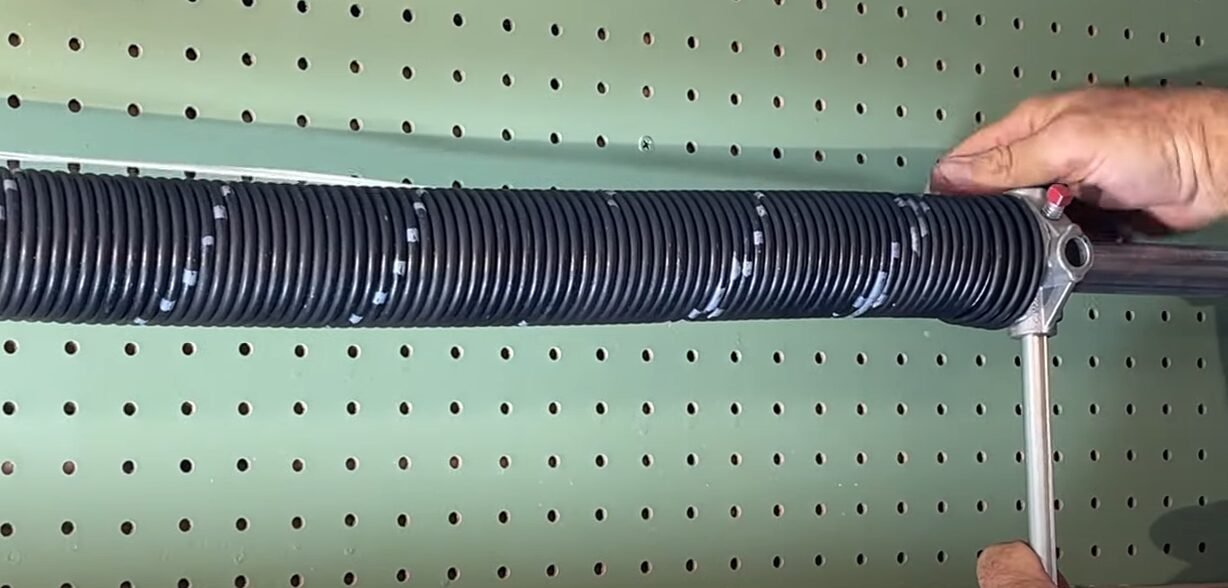
Torsion springs store energy through rotational motion, twisting as the door closes and unwinding to assist with opening. The amount of energy stored depends on the spring’s wire diameter, coil count, and the degree of rotation applied during installation. Professional installation involves calculating exact winding requirements based on door specifications and desired lifting characteristics.
Extension springs work differently, stretching to store energy as the door closes and contracting to provide lifting assistance during opening. These springs must extend specific distances under predetermined loads to maintain proper tension throughout the door’s operating cycle. The spring rate—how much force increases per inch of extension—determines the door’s balance characteristics.
The counterbalance system creates equilibrium between door weight and spring force, allowing smooth operation with minimal effort. When properly adjusted, springs provide enough lifting force to make a 150-pound door feel nearly weightless while preventing it from slamming shut under gravity’s influence. This balance point requires precise adjustment to maintain safe operation.
Spring tension calculations involve complex engineering formulas that consider door dimensions, weight distribution, track geometry, and hardware specifications. Professional technicians use these calculations to determine proper spring specifications and adjustment procedures. Attempting adjustments without understanding these relationships often creates dangerous conditions.
Cable and pulley systems multiply spring force through mechanical advantage, allowing smaller springs to lift heavier doors. The cable routing and pulley positioning affect how spring tension translates into lifting force at different door positions. Changes in cable tension or pulley alignment alter the entire system’s balance characteristics.
Signs of Improper Spring Tension
Recognizing spring tension problems early prevents minor issues from escalating into dangerous situations that threaten safety and require expensive repairs. Your garage door provides clear warning signs when spring tension drifts from proper specifications.
Door balance problems become apparent when you disconnect the automatic opener and test manual operation. A properly balanced door should stay in place when lifted halfway and require minimal effort to raise or lower. Doors that fall quickly or resist movement indicate spring tension issues that need immediate attention.
Uneven door movement suggests tension imbalances between paired springs or problems with cable tension distribution. One side of the door may move faster than the other, creating binding in tracks or stress concentrations in hardware components. This uneven operation accelerates wear and can cause sudden failures.
Automatic opener strain becomes obvious when motors work harder to lift doors or struggle to hold them in intermediate positions. Openers operating against improper spring tension consume more electricity, generate excessive heat, and experience premature component failures. The opener’s struggle indicates spring problems rather than motor issues.
Gap spacing between spring coils provides visual evidence of tension problems. Properly adjusted torsion springs maintain consistent coil spacing throughout their length, while extension springs show uniform stretching under load. Compressed or overstretched coils indicate adjustment problems that affect door operation.
Operational noise changes when spring tension problems develop. Springs operating under incorrect tension create grinding, squealing, or popping sounds as metal components stress beyond their design limits. These audio warnings often precede visible problems and provide early intervention opportunities.
Door closing speed varies significantly with spring tension problems. Doors may slam shut with dangerous force when springs provide insufficient lifting assistance, or they may close too slowly when tension exceeds proper levels. Both conditions create safety hazards and indicate adjustment needs.
The Importance of Professional Spring Adjustment
Spring adjustment requires specialized knowledge, tools, and safety equipment that make professional service the safest option for most homeowners. The forces involved in spring systems can cause serious injury or death when handled improperly, making DIY attempts extremely dangerous.
Winding bar techniques used for torsion spring adjustment demand precise procedures and proper tools. Professional technicians use specially designed winding bars that fit spring winding cones exactly, preventing slippage that can cause violent spring unwinding. The adjustment process requires specific step sequences that maintain safety while achieving proper tension.
Measurement precision ensures spring adjustments achieve the correct balance point without over-tensioning or under-tensioning the system. Professionals use calibrated tools and mathematical calculations to determine exact adjustment requirements based on door specifications and current spring condition.
Safety protocols protect technicians and property during spring adjustment procedures. These protocols include proper tool selection, sequential adjustment procedures, and safety equipment that prevents injury if springs fail during service. Following established procedures reduces risks and ensures consistent results.
Spring replacement becomes necessary when adjustment can’t restore proper operation or when springs show signs of fatigue, damage, or wear. Professional evaluation determines whether adjustment suffices or replacement provides better long-term value. This assessment considers spring age, condition, and remaining service life.
System testing follows any spring adjustment to verify proper operation and identify potential problems before they cause failures. Comprehensive testing includes balance checks, operational smoothness evaluation, and safety system verification. This testing ensures the entire door system works harmoniously after adjustments.
Warranty protection typically covers professional spring service, providing recourse if problems develop after adjustment or replacement. Professional services stand behind their work with guarantees that protect your investment and ensure satisfaction with results.
When spring tension problems compromise your garage door’s safety or performance, trust the expertise of professionals who understand the complex engineering principles involved. Contact Local Garage Door Repair Company for comprehensive spring evaluation and adjustment services that restore safe, reliable operation to your garage door system.